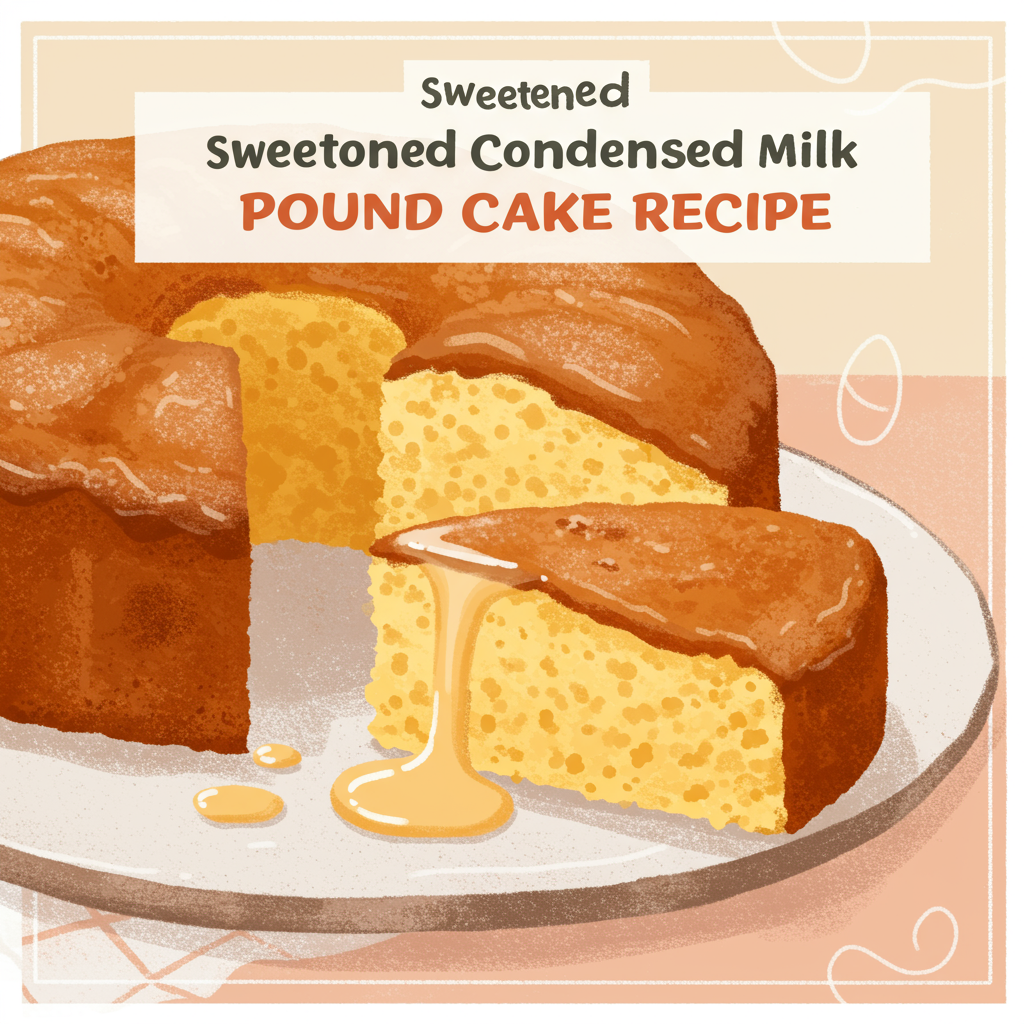
Welcome, fellow baking enthusiasts and aspiring home bakers! Are you ready to dive into a world of incredible flavor and luscious texture without the stress often associated with baking? Today, we’re unveiling our sensational Sweetened Condensed Milk Pound Cake Recipe. This isn’t just any pound cake; it’s a moist, dense, and unbelievably tender treat made even more irresistible with the magical touch of sweetened condensed milk. If you’re searching for easy baking recipes that deliver show-stopping results, you’ve hit the jackpot!

Perfect for potlucks, family gatherings, or simply a cozy afternoon tea, this recipe is designed with baking tips for beginners in mind. We’ll walk you through every step, ensuring your first (or fiftieth!) pound cake turns out perfectly golden, wonderfully fragrant, and utterly delicious. Get ready to impress yourself and everyone you share it with!
Ingredients List
Gather your ingredients! Using high-quality, fresh ingredients always makes a difference in the final taste of your pound cake.
| Ingredient | Quantity |
|---|---|
| All-Purpose Flour | 2 ½ cups |
| Baking Powder | 1 teaspoon |
| Salt | ½ teaspoon |
| Unsalted Butter, softened | 1 cup (2 sticks) |
| Granulated Sugar | 1 ½ cups |
| Large Eggs, room temperature | 4 |
| Sweetened Condensed Milk (14 oz can) | 1 can |
| Vanilla Extract | 2 teaspoons |
Step-by-Step Instructions: Mastering Your Pound Cake
Follow these detailed steps carefully for a perfect Sweetened Condensed Milk Pound Cake. Don’t rush, and enjoy the process!
Step 1: Prep Your Oven and Pan (The Foundation of Success!)
- Preheat your oven to 325°F (160°C). A lower temperature is often preferred for pound cakes as it allows them to bake through evenly without browning too quickly on the outside.
- Prepare your baking pan: Grease a 10-12 cup Bundt pan or a 9×13 inch baking pan generously with butter or baking spray. Then, lightly flour the pan, tapping out any excess. This creates a non-stick barrier, ensuring your beautiful cake releases easily after baking. Beginner Tip: Don’t skip this! A well-greased and floured pan is crucial for a smooth release and prevents sticking. If you’re using a Bundt pan, make sure to get into all the nooks and crannies.
Step 2: Whisk Your Dry Ingredients (Evenly Distributed Goodness)
- In a medium bowl, whisk together the all-purpose flour, baking powder, and salt.
- Why whisk? This step isn’t just about combining; it’s about aerating the flour and ensuring the baking powder and salt are evenly distributed. This prevents pockets of unmixed ingredients and helps your cake rise uniformly. Set aside.
Step 3: Cream Butter and Sugar (The Secret to a Tender Crumb)
- In a large mixing bowl (preferably using an electric mixer with a paddle attachment, but a hand mixer works too), beat the softened unsalted butter and granulated sugar together on medium-high speed.
- How long? Beat for about 5-7 minutes, scraping down the sides of the bowl occasionally, until the mixture is light, fluffy, and pale in color. This process, called “creaming,” incorporates air into the butter, which is vital for the cake’s texture and rise. Beginner’s Insight: If your butter isn’t soft enough, it won’t cream properly. It should be pliable but still cool to the touch – not melted!
Step 4: Incorporate the Eggs (One by One for Emulsification)
- Add the large eggs to the creamed butter and sugar mixture, one at a time.
- Beat well after each addition, ensuring each egg is fully incorporated before adding the next. This takes about 30 seconds per egg.
- Why one by one? Adding eggs gradually helps to create a stable emulsion, preventing the mixture from curdling and ensuring a smooth, cohesive batter. It also allows the egg proteins to fully integrate, contributing to the cake’s structure.
Step 5: Add Sweetened Condensed Milk and Vanilla (The Star Flavors)
- Pour in the entire can of sweetened condensed milk and the vanilla extract into the batter.
- Beat on low speed just until combined. Be careful not to overmix at this stage; we just want everything to come together.
- Flavor Boost: The sweetened condensed milk adds an incredible richness, moisture, and a subtle caramel-like sweetness that truly elevates this pound cake.
Step 6: Alternate Dry and Wet Ingredients (The Gentle Fold)
- With the mixer on low speed, gradually add the dry ingredient mixture to the wet ingredients in three additions, alternating with the liquid (in this case, the condensed milk and vanilla are already in, so we just add the dry).
- Start and end with the dry ingredients. For example: add ⅓ of the flour mixture, mix until just combined, then another ⅓, mix, and finally the last ⅓, mixing until just barely combined.
- Crucial Beginner’s Tip: Don’t Overmix! Overmixing develops the gluten in the flour too much, leading to a tough, dry cake. Mix only until no streaks of flour remain. A few small lumps are better than an overmixed batter. Use a spatula to gently fold in any remaining dry spots by hand.
Step 7: Bake to Golden Perfection
- Pour the batter evenly into your prepared baking pan. Gently tap the pan on the counter a few times to release any large air bubbles.
- Bake for 60-75 minutes for a Bundt pan or 70-85 minutes for a 9×13 inch pan. Baking times can vary depending on your oven and pan material.
- How to check for doneness: The cake is done when a wooden skewer or toothpick inserted into the center comes out clean or with a few moist crumbs attached (but no wet batter). The top should be golden brown and spring back when lightly touched. If the top is browning too quickly, you can loosely tent it with aluminum foil.
Step 8: Cool and Serve (Patience is a Virtue)
- Once baked, remove the cake from the oven and let it cool in the pan on a wire rack for 15-20 minutes.
- Why cool in the pan? This allows the cake to set and firm up, making it less likely to break when inverted.
- After 15-20 minutes, carefully invert the cake onto the wire rack to cool completely. This can take 1-2 hours.
- Serving Suggestion: This pound cake is absolutely divine on its own, but a dusting of powdered sugar, a dollop of whipped cream, or fresh berries can make it extra special.
Tips & Tricks for a Perfect Pound Cake Every Time
Baking is a science, but with these simple tips, you’ll feel like a pro in no time!
- Room Temperature Ingredients are Non-Negotiable: This is arguably the most important tip! Cold butter and eggs don’t emulsify properly, leading to a lumpy batter and a denser, less tender cake. Take them out of the fridge at least an hour before you plan to bake.
- Measure Flour Correctly: Don’t scoop flour directly from the bag with your measuring cup. This compacts it and results in too much flour. Instead, spoon the flour into your measuring cup and then level it off with a straight edge (like the back of a knife).
- Don’t Overmix: We’ve said it before, but it bears repeating! Once you add the flour, mix only until just combined. Overmixing develops gluten, which makes your cake tough and chewy instead of tender and moist.
- Proper Pan Preparation: Greasing and flouring your pan thoroughly prevents sticking and ensures a clean release. For Bundt pans, pay extra attention to all the intricate crevices. You can also use baking spray with flour (like Baker’s Joy) for convenience.
- Know Your Oven: Oven temperatures can vary widely. Consider investing in an inexpensive oven thermometer to ensure your oven is truly at the temperature you set. An accurately calibrated oven is key to consistent baking results.
- Patience During Cooling: Resist the urge to unmold your cake too soon. Allowing it to cool in the pan for the recommended time helps it firm up and prevents it from breaking apart.
- Storage: Once completely cooled, store your pound cake in an airtight container at room temperature for up to 3-4 days. It can also be frozen for longer storage (up to 3 months) – wrap tightly in plastic wrap and then foil.
Essential Baking Tools
Having the right tools makes baking a joy. Here are some essentials that will help you whip up this pound cake and many more treats!
- Mixing Bowl
- Whisk
- Baking Pan (Bundt or 9×13 inch)
- Measuring Cups
- Spatula
- Electric Mixer (handheld or stand mixer)
- Wire Rack
- Measuring Spoons
Nutrition Information (Estimated per slice)
Here’s an estimated nutritional breakdown for one slice of this rich pound cake (assuming 12 servings). Please note, these are approximate values and can vary based on specific ingredient brands and preparation.
| Nutrient | Amount |
|---|---|
| Calories | 420 kcal |
| Carbohydrates | 60 g |
| Protein | 6 g |
| Fat | 19 g |
| Fiber | 1 g |
| Sugar | 45 g |
Frequently Asked Questions (FAQs)
Baking can sometimes throw curveballs, especially for beginners. Here are some common questions and their answers to help you troubleshoot:
Q1: My cake sank in the middle. What went wrong?
A1: This is a common issue! Several factors can cause a cake to sink: opening the oven door too early (which lets cold air in and deflates the cake’s structure), underbaking (the center isn’t fully cooked and can’t support itself), too much leavening agent (like baking powder, causing it to rise too quickly then collapse), or overmixing the batter (which develops too much gluten, creating a weak structure). Ensure your oven temperature is accurate and resist opening the door until the last 15-20 minutes of baking.
Q2: Do I really need room temperature ingredients?
A2: Yes, absolutely! Room temperature ingredients are crucial for a smooth, emulsified batter and a tender, consistent crumb. Softened butter creams better with sugar, incorporating more air. Room temperature eggs mix more evenly into the batter, preventing curdling and creating a stable emulsion. Cold ingredients can cause the batter to seize up and result in a dense, uneven cake.
Q3: Can I use a different size baking pan?
A3: You can, but you’ll likely need to adjust the baking time. A smaller pan will result in a thicker cake and might require a longer baking time, while a larger pan might bake faster. Always fill your pan no more than two-thirds full to prevent overflow. If you’re unsure, it’s best to stick to the recommended pan size for optimal results.
Q4: How should I store this Sweetened Condensed Milk Pound Cake?
A4: Once the cake is completely cooled, store it in an airtight container at room temperature for up to 3-4 days. This helps to maintain its moisture and freshness. For longer storage, you can freeze individual slices or the whole cake. Wrap it tightly in plastic wrap, then a layer of aluminum foil, and freeze for up to 3 months. Thaw at room temperature before serving.
Q5: Can I add a glaze or frosting to this cake?
A5: Absolutely! While delicious on its own, a simple glaze can elevate it. A classic would be a quick powdered sugar glaze (powdered sugar mixed with a little milk or lemon juice). A cream cheese frosting would also pair beautifully with the richness of the pound cake. Just make sure the cake is completely cool before applying any glaze or frosting.
Conclusion: Your Delicious Baking Journey Begins!
And there you have it! A truly delightful and surprisingly simple Sweetened Condensed Milk Pound Cake Recipe that promises to become a staple in your baking repertoire. This cake is a testament to how a few simple ingredients, combined with a little patience and love, can create something truly extraordinary. Whether you’re a seasoned baker or just starting your journey, this recipe offers a wonderful opportunity to create something delicious and impressive.
Don’t be afraid to get your hands a little floury, follow these steps, and watch the magic happen. We can’t wait to hear how your pound cake turns out. Happy baking, and enjoy every single sweet, tender bite!