Welcome, fellow baking enthusiasts and kitchen adventurers! Are you ready to sprinkle a little Nordic magic into your home? If you’ve been searching for a delightful and surprisingly simple project, you’ve landed in the perfect spot. Today, we’re diving into the whimsical world of gnomes or ‘Tomte’ as they’re known in Scandinavian folklore) with our very own Tomte Cake Recipe.

This isn’t just any cake; it’s a moist, tender vanilla dream adorned with a creamy frosting, designed specifically to be one of the most easy baking recipes you’ll ever try. Whether you’re a seasoned pro or just starting your journey with baking tips for beginners, this step-by-step guide will ensure your Tomte Cake turns out perfectly. Get ready to impress your friends and family with a charming creation that tastes as good as it looks!
Ingredients for Your Magical Tomte Cake
Gather your ingredients! Having everything measured and ready before you start is one of the best habits for any beginner baker.
| Ingredient | Quantity | Unit |
|---|---|---|
| For the Vanilla Cake: | ||
| All-Purpose Flour | 2 ½ | cups |
| Granulated Sugar | 1 ¾ | cups |
| Baking Powder | 1 | tablespoon |
| Salt | ½ | teaspoon |
| Unsalted Butter (softened) | 1 | cup (2 sticks) |
| Large Eggs | 4 | |
| Whole Milk | 1 | cup |
| Vanilla Extract | 2 | teaspoons |
| For the Cream Cheese Frosting: | ||
| Cream Cheese (softened) | 8 | ounces |
| Unsalted Butter (softened) | ½ | cup (1 stick) |
| Powdered Sugar (confectioners’ sugar) | 3-4 | cups |
| Vanilla Extract | 1 | teaspoon |
| Milk (optional, for consistency) | 1-2 | tablespoons |
| Red Food Coloring (optional, for Tomte hat) | A few | drops |
Step-by-Step Instructions: Baking Your First Tomte Cake
Let’s get baking! Follow these detailed steps, and don’t worry – we’ve got plenty of tips to guide you through.
Part 1: Preparing the Vanilla Cake
- Preheat and Prep Your Pan: First things first, preheat your oven to 350°F (175°C). This ensures your oven is at the perfect temperature when your cake batter is ready to go in, preventing uneven baking. Next, take a 9×13 inch baking pan (or two 8-inch round pans for a layer cake). Grease it thoroughly with butter or non-stick spray, then lightly flour it. Tap out any excess flour. This creates a non-stick barrier, making sure your beautiful cake comes out easily!
- Combine Dry Ingredients: In a large mixing bowl, whisk together the all-purpose flour, granulated sugar, baking powder, and salt. Whisking ensures these ingredients are evenly distributed, which is crucial for a consistent rise and texture. For beginners, remember to “level” your flour: spoon it into your measuring cup and then use the back of a knife or a straight edge to scrape off any excess from the top. Don’t pack the flour into the cup!
- Cream Butter and Sugar: In a separate large bowl (or in the bowl of a stand mixer with the paddle attachment), beat the softened unsalted butter on medium speed until it’s light and fluffy, about 2-3 minutes. Gradually add the granulated sugar, continuing to beat for another 3-5 minutes until the mixture is pale yellow and significantly lighter in texture. This process, called “creaming,” incorporates air into the butter and sugar, which is essential for a light and airy cake. If your butter isn’t soft enough, it won’t cream properly – leave it out on the counter for at least an hour before you start.
- Add Eggs Gradually: Add the large eggs one at a time, beating well after each addition until fully incorporated. Scrape down the sides of the bowl with a spatula after each egg to ensure everything is mixed evenly. Adding eggs one by one helps to maintain the emulsification and prevents the batter from separating.
- Stir in Vanilla: Mix in the vanilla extract. Vanilla adds that classic comforting flavor to our cake!
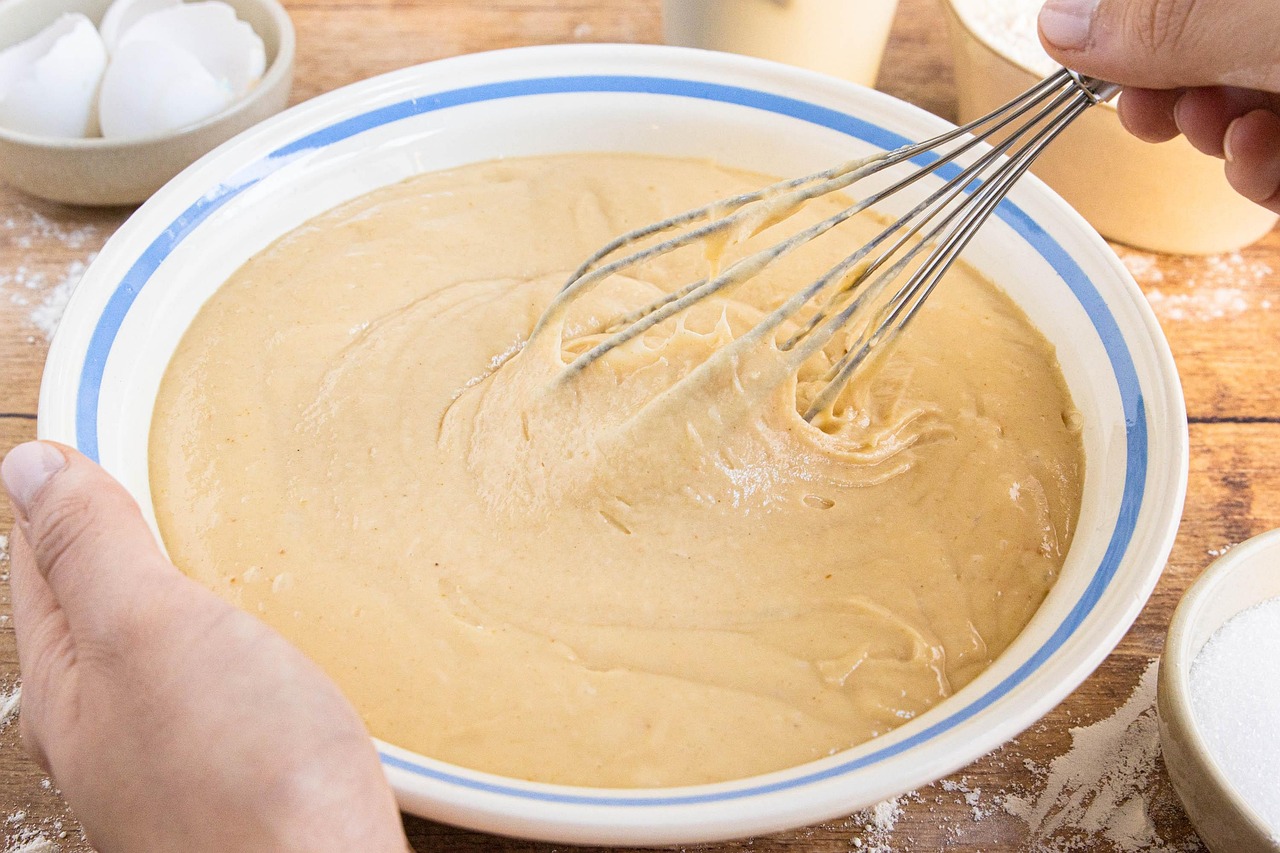
- Alternate Dry and Wet Ingredients: Now, we’ll gradually add the dry ingredients and milk to the wet mixture. This is an important step to prevent overmixing.
- Add about one-third of the dry ingredient mixture to the butter mixture and beat on low speed until just combined.
- Pour in half of the whole milk and beat until just combined.
- Repeat with another third of the dry ingredients, then the remaining milk.
- Finish with the last third of the dry ingredients.
Beginner Tip: Mix until *just* combined after each addition. Overmixing develops the gluten in the flour too much, leading to a tough, dense cake. We want light and tender! Use a spatula to give the batter a final gentle fold to catch any unmixed bits at the bottom.
- Bake Your Cake: Pour the cake batter into your prepared 9×13 inch pan and spread it evenly. Bake for 30-35 minutes (or 25-30 minutes for two 8-inch rounds), or until a wooden skewer or toothpick inserted into the center comes out clean. If it comes out with wet batter, bake for a few more minutes and check again. If it comes out with moist crumbs, it’s perfect!
- Cooling Down: Once baked, remove the cake from the oven and let it cool in the pan on a wire rack for about 15-20 minutes. This allows the cake to set and prevents it from breaking when you remove it. After 15-20 minutes, carefully invert the cake onto the wire rack to cool completely. This is crucial! Frosting a warm cake will result in melted, messy frosting. Be patient – a fully cooled cake is worth the wait.
Part 2: Crafting the Cream Cheese Frosting
While your cake is cooling, let’s make that luscious cream cheese frosting!
- Cream Butter and Cream Cheese: In a large mixing bowl, or the bowl of your stand mixer, beat the softened cream cheese and softened unsalted butter together on medium speed until smooth and creamy, about 2-3 minutes. Make sure both are at room temperature to prevent lumps.
- Add Powdered Sugar: Gradually add the powdered sugar (confectioners’ sugar) to the mixture, one cup at a time, beating on low speed until combined, then increasing to medium-high speed until light and fluffy. If your frosting seems too thick, add 1-2 tablespoons of milk, one teaspoon at a time, until you reach your desired consistency. If it’s too thin, add a bit more powdered sugar.
- Stir in Vanilla: Beat in the vanilla extract until fully incorporated.
- Frost Your Cake: Once the cake is completely cool, spread the cream cheese frosting evenly over the top using an offset spatula or the back of a spoon. For a rustic Tomte look, you don’t need to be perfectly smooth – a bit of texture adds charm!
- Optional Tomte Decoration: To make it a “Tomte” cake, you can divide a small portion of the frosting (about 1/4 cup) into a separate bowl and mix in a few drops of red food coloring. Using a small spoon or a piping bag with a round tip, you can draw a simple Tomte hat shape on one corner of the cake, or create small red dots. You can also use a little bit of chocolate for eyes, or flaked coconut for a beard! Be creative and have fun with it.
Baking Tips & Tricks for Beginners
Conquering the kitchen is all about understanding the basics. Here are some essential tips to make your baking journey smoother and more successful:
- Room Temperature Ingredients are Key: For most baking, especially cakes, ensure your butter, eggs, and cream cheese are at room temperature. This allows them to emulsify properly, creating a smooth, uniform batter that traps air efficiently, resulting in a lighter, fluffier cake and lump-free frosting.
- Measure Accurately: Baking is a science! Use proper measuring cups for dry ingredients (levelled with a straight edge) and liquid measuring cups for liquids (read at eye level). For butter, follow the markings on the wrapper or use a kitchen scale for precision. Too much or too little of an ingredient can drastically change the outcome.
- Do Not Overmix: Once you add flour to your wet ingredients, mix only until just combined. Overmixing develops gluten, leading to a tough, dry cake. A few small lumps are perfectly fine!
- Preheat Your Oven Properly: Always preheat your oven for at least 15-20 minutes *before* you put your cake in. An unevenly heated oven can cause your cake to sink, bake unevenly, or not rise properly. Consider investing in an oven thermometer to verify your oven’s true temperature.
- Cool Completely: Patience is a virtue, especially when cooling cakes. Frosting a warm cake will cause the frosting to melt and slide off, making a sticky mess. Let your cake cool entirely on a wire rack before even thinking about frosting it.
- Read the Recipe First: Before you even get out your first ingredient, read the entire recipe from start to finish. This helps you understand the process, gather all necessary tools, and prevent surprises.
Essential Baking Tools for Your Kitchen
Having the right tools makes all the difference. Here are some basics you’ll want in your baking arsenal:
- Mixing Bowl (various sizes)
- Whisk
- Baking Pan (9×13 inch or 8-inch rounds)
- Measuring Cups (dry and liquid)
- Spatula (rubber and offset for frosting)
- Electric Mixer (handheld or stand mixer)
- Wire Rack
- Parchment Paper (optional, but great for lining pans)
Tomte Cake Nutrition Information (per serving, estimated for 1/12th of cake)
Please note that these values are estimates and can vary based on specific ingredients and portion sizes.
| Nutrient | Amount |
|---|---|
| Calories | 420 kcal |
| Total Carbohydrates | 65 g |
| Protein | 5 g |
| Total Fat | 17 g |
| Fiber | 1 g |
| Total Sugar | 45 g |
Frequently Asked Questions About Baking Your Tomte Cake
Q1: My cake sank in the middle! What went wrong?
A cake sinking in the middle can happen for a few reasons. Common culprits include: opening the oven door too early (before the cake is set, usually in the first 2/3 of baking time), an oven that’s too cool (always preheat thoroughly!), overmixing the batter (which creates too much air that then collapses), or using too much baking powder. Make sure your oven is preheated to the correct temperature and resist the urge to peek!
Q2: Can I use oil instead of butter in the cake?
While you technically *can* use oil, it will change the texture and flavor. Butter contributes to a rich flavor and a tender crumb, especially when creamed with sugar as it incorporates air. Oil will result in a moister but denser cake, and you’ll miss the buttery taste. For this particular recipe, we recommend sticking with butter for the best results.
Q3: How do I know when the cake is perfectly done?
The best way is the toothpick test! Insert a wooden skewer or toothpick into the very center of the cake. If it comes out clean with no wet batter attached, your cake is done. If it has a few moist crumbs, that’s perfect for a tender cake. If it’s wet, give it a few more minutes. Also, the edges of the cake should start to pull away slightly from the sides of the pan, and the top should spring back when lightly touched.
Q4: Can I make this Tomte Cake ahead of time? How should I store it?
Absolutely! The unfrosted cake can be baked a day in advance and stored tightly wrapped in plastic wrap at room temperature. The cream cheese frosting can also be made a day ahead and stored in an airtight container in the refrigerator; let it come to room temperature and re-whip it slightly before frosting. Once frosted, store the Tomte Cake in an airtight container in the refrigerator for up to 3-4 days due to the cream cheese frosting. Bring it to room temperature for about 30 minutes before serving for the best flavor and texture.
Q5: My frosting is too runny/too stiff. How do I fix it?
If your frosting is too runny, it likely needs more powdered sugar. Add it gradually, 1/4 cup at a time, beating well after each addition until it reaches your desired consistency. If it’s too stiff, add a tiny bit of milk (1 teaspoon at a time) or even a splash of vanilla extract, beating well after each addition until it loosens up. Always ensure your butter and cream cheese are at room temperature to avoid a lumpy or separated frosting.
Happy Baking, Little Gnomes!
And there you have it – your very own magical Tomte Cake! We hope this easy baking recipe has brought a smile to your face and filled your kitchen with wonderful aromas. Remember, baking is an art form that gets better with practice, so don’t be afraid to experiment and make it your own. We believe in you, beginner bakers! Share your beautiful Tomte creations with us, and let’s spread some baking joy. Happy baking, and may your cakes always rise beautifully!