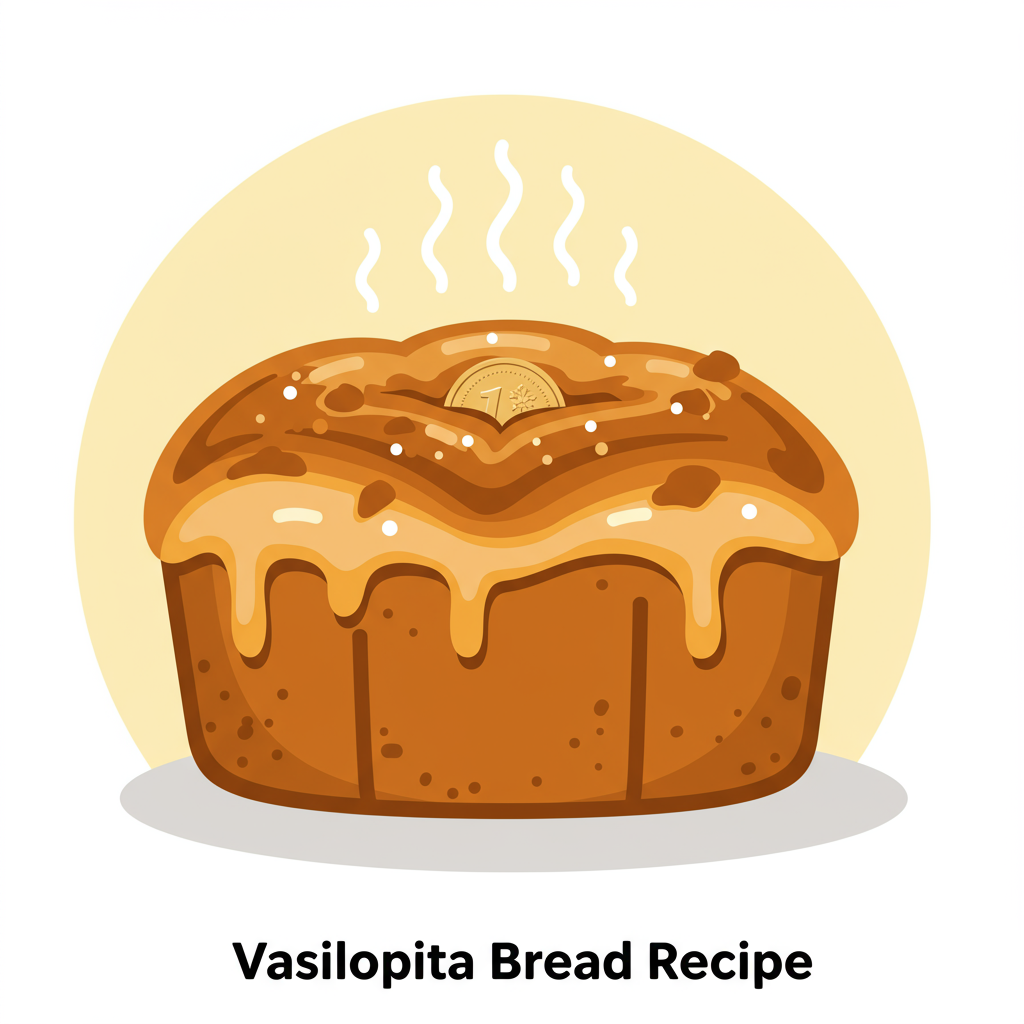
Welcome, fellow baking enthusiasts! Are you ready to dive into a beautiful, delicious tradition? Our Vasilopita Bread Recipe is more than just a sweet treat; it’s a cherished symbol of good luck for the New Year, a staple in many Greek-American homes across the USA. Don’t be intimidated if you’re new to baking; this comprehensive guide is designed to be one of the most easy baking recipes you’ll ever try. We’ll walk you through every single step, ensuring your first Vasilopita is a resounding success. Packed with essential baking tips for beginners, this recipe will help you master the art of yeasted bread, creating a fragrant, tender loaf that’s perfect for sharing with family and friends. Get ready to fill your kitchen with the irresistible aroma of orange and mahleb – a truly magical experience awaits!
Ingredients List
Gather your ingredients! Freshness is key, especially for your yeast.
| Ingredient | Quantity | Unit |
|---|---|---|
| Warm Milk (105-115°F / 40-46°C) | 1 | cup |
| Active Dry Yeast | 2 ¼ | teaspoons (1 standard packet) |
| Granulated Sugar | ½ | cup (plus 1 tsp for yeast) |
| Unsalted Butter, melted | ½ | cup (1 stick) |
| Large Eggs | 2 | |
| All-Purpose Flour | 4 – 4 ½ | cups |
| Salt | 1 | teaspoon |
| Ground Mahleb (optional but recommended) | 1 ½ | teaspoons |
| Orange Zest | 1 | tablespoon (from 1 large orange) |
| Vanilla Extract | 1 | teaspoon |
| For Egg Wash & Garnish: | ||
| Large Egg Yolk | 1 | |
| Milk or Water | 1 | tablespoon |
| Slivered Almonds (optional) | 2 | tablespoons |
| A cleaned coin (wrapped in foil) | 1 | |
Step-by-Step Instructions: Baking Your Vasilopita

Follow these detailed steps carefully, and you’ll be amazed at what you can create!
Step 1: Activate the Yeast (The Foundation of Your Bread!)
- In a large mixing bowl (or the bowl of your stand mixer), combine the warm milk (ensure it’s between 105-115°F, lukewarm to the touch but not hot, as too hot will kill the yeast), 1 teaspoon of granulated sugar, and the active dry yeast.
- Beginner Tip: If your milk is too hot, it will kill the yeast and your dough won’t rise. If it’s too cold, the yeast won’t activate. Use a thermometer if you’re unsure!
- Stir gently and let it sit for 5-10 minutes. You should see a foamy layer form on top, indicating your yeast is alive and active. If it doesn’t foam, your yeast might be old or the water temperature was off, and you’ll need to start this step over.
Step 2: Prepare the Wet Ingredients
- Once your yeast is foamy, add the melted butter (make sure it’s cooled slightly, not hot), the remaining ½ cup of granulated sugar, 2 large eggs, orange zest, ground mahleb (if using), and vanilla extract to the yeast mixture.
- Whisk everything together until well combined.
Step 3: Gradually Add Dry Ingredients
- In a separate medium bowl, whisk together 4 cups of all-purpose flour and the salt. This helps distribute the salt evenly.
- Gradually add the flour mixture to the wet ingredients, about 1 cup at a time, mixing well after each addition.
- If using a stand mixer, use the dough hook attachment on low speed. If mixing by hand, use a sturdy wooden spoon or spatula.
- Once the dough comes together and starts to look shaggy, transfer it to a lightly floured surface (if kneading by hand) or continue with the stand mixer.
- Beginner Tip: Don’t dump all the flour in at once! Different flours absorb liquid differently, and you might not need all 4 ½ cups. You want a dough that’s soft but not overly sticky.
Step 4: Knead the Dough (The Heart of Good Bread!)
- By Stand Mixer: Knead on medium-low speed for 8-10 minutes, until the dough is smooth, elastic, and pulls away cleanly from the sides of the bowl.
- By Hand: Knead the dough on a lightly floured surface for 10-15 minutes. Push the dough away from you with the heels of your hands, fold it back, rotate, and repeat. It’s a workout, but very rewarding! Your dough should become smooth, soft, and elastic.
- Test for Doneness (Windowpane Test): Take a small piece of dough and gently stretch it. If you can stretch it thin enough to see light through it without tearing, it’s sufficiently kneaded. If it tears, keep kneading for a few more minutes.
Step 5: First Rise (Proofing)
- Lightly grease a large bowl with a little oil. Place the kneaded dough in the bowl, turning it once to coat the top with oil (this prevents it from drying out).
- Cover the bowl tightly with plastic wrap or a clean kitchen towel.
- Place the bowl in a warm, draft-free place (like a turned-off oven with the light on, or a sunny spot). Let it rise for 1 ½ to 2 hours, or until it has doubled in size.
- Beginner Tip: Patience is key here! Don’t rush the rise. A slow, steady rise develops better flavor and texture. If your kitchen is cool, it might take longer.
Step 6: Shape the Vasilopita and Insert the Coin
- Once the dough has doubled, gently punch it down to release the air.
- Transfer the dough to a lightly floured surface and gently knead it for a minute or two to remove any large air bubbles.
- Shape the dough into a smooth, round loaf.
- Prepare the coin: Thoroughly wash a coin (a quarter or a small medallion works well), dry it completely, and then wrap it tightly in a small piece of aluminum foil. This is for hygiene and safety.
- Carefully insert the foil-wrapped coin into the bottom or side of the loaf, pushing it deep enough so it’s completely hidden by the dough.
- Place the shaped loaf onto a baking sheet lined with parchment paper or a greased 9-inch round baking pan.
Step 7: Second Rise
- Cover the loaf loosely with plastic wrap or a clean kitchen towel.
- Let it rise again in a warm, draft-free place for another 45-60 minutes, or until it looks visibly puffy and has almost doubled in size again.
- Beginner Tip: This second rise is crucial for a light, airy texture. Don’t skip it!
Step 8: Egg Wash and Decorate
- Preheat your oven to 350°F (175°C) towards the end of the second rise.
- In a small bowl, whisk together the egg yolk and 1 tablespoon of milk or water to create the egg wash.
- Gently brush the top of the risen loaf with the egg wash. This gives the bread a beautiful golden-brown crust.
- If desired, sprinkle with slivered almonds. You can also form the year with strips of dough, though for beginners, a simple round loaf is perfect!
Step 9: Bake Your Vasilopita
- Place the baking sheet or pan in the preheated oven.
- Bake for 35-45 minutes, or until the Vasilopita is golden brown on top and sounds hollow when tapped on the bottom.
- Beginner Tip: If the top is browning too quickly, you can loosely tent it with aluminum foil for the last 10-15 minutes of baking.
- To ensure it’s cooked through, an internal thermometer inserted into the center should read around 200-205°F (93-96°C).
Step 10: Cool and Serve
- Once baked, carefully remove the Vasilopita from the oven and transfer it to a wire rack to cool completely. This is important for preventing a soggy bottom.
- Once cool, it’s ready to be traditionally sliced on New Year’s Day.
- Tradition: On New Year’s Day, the Vasilopita is sliced by the head of the household. The first slice is for Christ, the second for the Virgin Mary, the third for St. Basil, and then for family members in order of age, from oldest to youngest. The person who finds the coin is said to have good luck for the entire year!
Tips & Tricks for a Perfect Vasilopita
Mastering yeasted bread takes a little practice, but these tips will set you up for success:
- Yeast Vitality: Always proof your yeast first. If it doesn’t get foamy, your yeast is dead, or your liquid temperature was off. Don’t proceed with dead yeast, or your bread won’t rise.
- Don’t Rush the Rise: Yeast activity varies with temperature. If your kitchen is cool, your dough will take longer to rise. Be patient! A slow rise often means more flavor.
- Measure Flour Correctly: For accurate results, spoon your flour into the measuring cup and then level it off with a straight edge. Scooping directly from the bag can compact the flour, leading to too much flour and a dry, dense bread.
- Kneading is Key: Proper kneading develops the gluten, which gives bread its structure and chewiness. Don’t under-knead (resulting in dense bread) or over-knead (which can make it tough, though this is harder to do by hand).
- The Coin Tradition: Ensure the coin is thoroughly cleaned and wrapped tightly in foil before inserting it. This keeps it hygienic and prevents it from directly touching the dough.
- Flavor Variations: While mahleb and orange zest are traditional, you can experiment! A touch of lemon zest, ground cardamom, or even a splash of rosewater can add unique flavors.
- Oven Temperature: Invest in an oven thermometer to ensure your oven is truly at the temperature you set. Many ovens run hot or cold, which can significantly impact baking time and results.
Essential Baking Tools
Having the right tools makes all the difference in your baking journey!
- Mixing Bowl (at least one large)
- Whisk (for combining wet and dry ingredients)
- Round Baking Pan (9-inch or a baking sheet with parchment paper)
- Measuring Cups and Measuring Spoons (for precise measurements)
- Rubber Spatula or wooden spoon
- Optional: Stand Mixer with dough hook (highly recommended for ease)
- Optional: Kitchen Thermometer (for milk temperature and internal bread temperature)
Nutrition Info (Estimated per serving, 1/12th of loaf)
Please note: These are estimated nutritional values and can vary based on specific ingredient brands and preparation.
| Nutrient | Amount |
|---|---|
| Calories | 280-320 kcal |
| Carbohydrates | 45-55 g |
| Protein | 6-8 g |
| Fat | 8-12 g |
| Fiber | 1-2 g |
| Sugar | 15-20 g |
Frequently Asked Questions (FAQs)
- Q: Can I make Vasilopita ahead of time?
A: Yes! You can prepare the dough up to the first rise, then punch it down, cover it tightly, and refrigerate it overnight (up to 24 hours). The next day, let it come to room temperature for about 30-60 minutes before shaping and proceeding with the second rise and baking. You can also bake it completely, let it cool, and then freeze it for up to a month. Thaw at room temperature. - Q: My dough isn’t rising, what went wrong?
A: The most common culprits are inactive yeast (check the expiration date or ensure it foamed in step 1), milk that was too hot (killing the yeast) or too cold (slowing it down too much), or a cold proofing environment. Ensure your kitchen is warm and draft-free for optimal rising. - Q: How do I make sure the coin is found safely?
A: Always thoroughly wash and dry the coin, then wrap it tightly in aluminum foil before inserting it deep into the dough. When serving, make sure to alert everyone, especially children, about the coin’s presence. - Q: What can I use if I don’t have mahleb?
A: Mahleb provides a unique, slightly cherry-almond flavor. If you can’t find it, you can omit it or substitute with a tiny pinch of ground cardamom and a drop of almond extract for a somewhat similar aromatic profile, though it won’t be exactly the same. - Q: Can I bake this in a loaf pan instead of a round one?
A: Yes, absolutely! You can divide the dough in half and bake it in two standard loaf pans (9×5 inches). Adjust baking time slightly, as two smaller loaves might bake a bit faster. Keep an eye on the internal temperature.
Conclusion: Your Vasilopita Journey Begins!
And there you have it – your very own homemade Vasilopita! This journey from simple ingredients to a golden, aromatic loaf is incredibly rewarding. Whether you’re celebrating a special occasion or simply want to try a new, delicious baking challenge, this Vasilopita Bread Recipe is a fantastic choice. Remember, baking is an art that gets better with practice, so don’t be afraid to experiment and make it your own. Share your beautiful creations with us, and may your Vasilopita bring you and your loved ones good fortune and joy in the coming year!
Happy baking, and Kali Chronia (Happy New Year)!