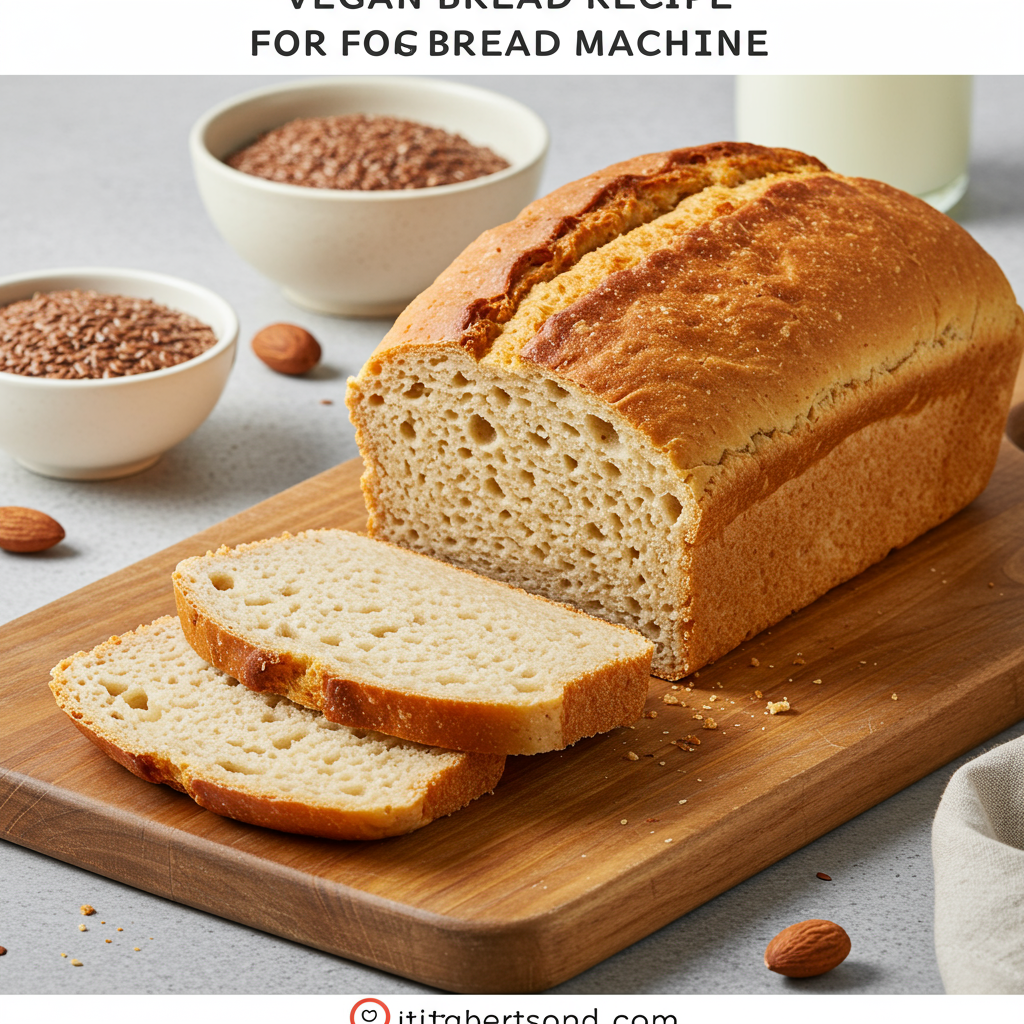
Vegan Bread Recipe For Bread Machine: Your Easiest Loaf Yet!
Imagine waking up to the irresistible aroma of freshly baked bread filling your home. Sounds like a dream, right? Well, with our **Vegan Bread Recipe For Bread Machine**, that dream becomes a delicious reality, even if you’re a complete beginner! Baking your own bread can seem daunting, but thanks to the magic of the bread machine, it’s one of the most **easy baking recipes** you’ll ever try. No manual kneading, no endless waiting – just perfectly risen, soft, and fluffy vegan bread with minimal effort. This guide is packed with **baking tips for beginners** to ensure your first loaf (and every loaf after!) is a resounding success. Get ready to impress yourself and your taste buds!
Whether you’re new to vegan baking, just got a bread machine, or simply looking for a hassle-free way to enjoy homemade bread, this recipe is designed for you. We’ll walk you through every step, ensuring you understand not just what to do, but why, so you can bake with confidence. Let’s get started on your journey to the best vegan bread!
Ingredients You’ll Need
Gathering your ingredients and measuring them accurately is the first step to baking success. Remember, precision is key in baking!
| Ingredient | Quantity | Unit |
|---|---|---|
| Warm Plant-Based Milk (e.g., almond, soy, oat) | 1.5 | cups |
| Vegan Butter (melted) or Neutral Oil (e.g., canola, vegetable) | 2 | tablespoons |
| Granulated Sugar | 2 | tablespoons |
| Salt | 1.5 | teaspoons |
| All-Purpose Flour (or Bread Flour for a chewier texture) | 3.5 | cups |
| Active Dry Yeast (or Instant Yeast) | 2.25 | teaspoons |
A Quick Note on Ingredients:
- Plant-Based Milk: Ensure it’s warm, but not hot. Around 105-115°F (40-46°C) is perfect for activating yeast without killing it. If it’s too cold, your yeast won’t activate properly.
- Flour: For best results, measure your flour by lightly spooning it into a measuring cup and then leveling it off with a straight edge. Don’t scoop directly from the bag, as this can compact the flour and lead to too much being added, resulting in a dense loaf.
- Yeast: Active Dry Yeast typically needs to be proofed (activated) first, but in a bread machine, it’s often added directly. Instant Yeast works even faster and can also be added directly. Check the expiry date on your yeast – old yeast is a common culprit for failed bread!
Step-by-Step Instructions for Your Bread Machine
Follow these detailed steps carefully, and you’ll have a gorgeous loaf of vegan bread with minimal effort!
-
Prepare Your Ingredients and Bread Machine Pan
Before you begin, gather all your ingredients and measure them out precisely. This ensures you won’t be scrambling mid-process. Lightly grease the bread machine pan with a little extra vegan butter or oil if your pan tends to stick, though most non-stick bread machine pans don’t require this for bread recipes.
-
Add Liquids to the Bread Machine Pan First
This is a crucial step for bread machine success! Pour the **warm plant-based milk** into the bottom of your bread machine pan. Next, add the **melted vegan butter or neutral oil**. The liquids form the base of your dough.
Beginner Tip: Ensure your milk isn’t too hot (above 120°F/49°C) as it can kill the yeast, or too cold (below 100°F/38°C) as it won’t activate the yeast efficiently. A simple trick is to touch the milk; it should feel pleasantly warm, not hot.
-
Add Dry Ingredients (Except Yeast)
Carefully add the **granulated sugar** and **salt** on top of the liquids. Try to keep the salt and sugar separate initially, if possible, as direct contact with yeast can sometimes hinder its activation. Next, gently spoon the **all-purpose flour** (or bread flour) over the liquid ingredients, creating a mound. Do not stir!
Common Mistake & Fix: Adding too much flour is a frequent error. Always spoon flour into your measuring cup and level it off. If your bread turns out dense or dry, too much flour might be the reason.
-
Create a Well for the Yeast
Using your finger, create a small indentation or “well” in the center of the flour mound. Carefully pour the **active dry yeast** into this well. It’s important that the yeast does not directly touch the liquid ingredients or the salt at this stage. This separation prevents premature activation or inhibition of the yeast.
Why this order? In a bread machine, ingredients are added in layers. The yeast, being the most sensitive, sits on top of the flour, safely away from the liquids and salt until the machine’s mixing cycle begins. This ensures optimal yeast activation when the time is right.
-
Place Pan in Bread Machine and Select Program
Carefully place the bread machine pan back into the bread machine, ensuring it’s securely locked in place. Close the lid. Now, select your desired program. For this recipe, the **”Basic”** or **”White Bread”** cycle is usually perfect. Choose a **”Medium”** crust setting for a golden-brown finish.
Bread Machine Cycles Explained: The “Basic” cycle typically involves a kneading phase, a rise phase, a punch-down, a second rise, and then baking. It takes about 3-4 hours, doing all the work for you!
-
Monitor the Dough During the First Kneading Cycle (Crucial Step!)
Once you start the program, the bread machine will begin its first kneading cycle. This is your most important opportunity to ensure the dough has the right consistency. After about 5-10 minutes of kneading, open the lid (briefly!) and observe the dough ball.
- If the dough looks too sticky and wet: It’s sticking excessively to the sides of the pan and not forming a cohesive ball. Add **one teaspoon of flour at a time**, allowing it to incorporate before adding more, until the dough forms a soft, slightly sticky ball that cleans the sides of the pan.
- If the dough looks too dry and crumbly: It’s not coming together into a ball, or it looks very stiff and hard. Add **one teaspoon of warm plant-based milk (or water) at a time**, allowing it to incorporate, until the dough reaches the correct consistency.
Why this matters: Flour absorption can vary based on humidity, brand, and type. Adjusting the dough’s consistency during the first knead is the secret to a perfectly textured loaf. Don’t skip this check!
-
Allow the Machine to Do Its Work
Once you’re satisfied with the dough’s consistency, close the lid and let the bread machine complete its cycle. It will go through the remaining kneading, rising, and baking phases automatically. Resist the urge to open the lid during the rising cycles, as this can cause the dough to deflate.
-
Remove and Cool the Bread
When the bread machine beeps to signal the end of the cycle, immediately remove the bread pan from the machine. Carefully invert the pan onto a wire cooling rack to release the loaf. If the paddle is stuck in the bread, use a non-stick utensil to gently pry it out once the bread has cooled slightly.
The Golden Rule of Cooling: This is arguably the most overlooked yet critical step! **Allow the bread to cool completely on the wire rack for at least 1-2 hours before slicing.** Slicing hot bread traps steam, leading to a gummy, dense texture. Cooling allows the internal structure of the bread to set properly, resulting in a light, airy crumb.
-
Slice and Enjoy!
Once fully cooled, use a serrated bread knife to slice your homemade vegan bread. Enjoy it fresh as toast, for sandwiches, or simply with your favorite spread. Congratulations, you’ve just baked a delicious loaf of bread!
Tips & Tricks for Perfect Vegan Bread Every Time
Mastering bread baking is a journey, and these actionable tips will help you achieve consistent success with your bread machine.
- Yeast Freshness is Paramount: Old or inactive yeast is the most common reason bread doesn’t rise. Always check the expiration date. If in doubt, you can proof active dry yeast by dissolving 1 teaspoon of sugar in 1/4 cup of warm water (105-115°F / 40-46°C), then sprinkling 2.25 teaspoons of yeast on top. If it foams and bubbles within 5-10 minutes, your yeast is active!
- Ingredient Temperature Matters: Ensure your plant-based milk is warm (not hot!) to properly activate the yeast. Cold liquids can slow down or prevent yeast activation, leading to a dense loaf.
- Measure Flour Accurately: Avoid scooping flour directly from the bag with your measuring cup. This compacts the flour, adding too much to your recipe. Instead, lightly spoon flour into your measuring cup and then level it off with a straight edge (like the back of a knife). This prevents dry, crumbly bread.
- Don’t Open the Lid During Rising: While it’s okay to open the lid briefly during the initial kneading to check dough consistency, resist the urge to peek during the rising cycles. Opening the lid can cause a sudden temperature drop, which can make your dough deflate.
- Patience with Cooling: We know it’s tempting to slice into that warm, aromatic loaf immediately, but cooling is crucial. Hot bread is still cooking internally, and slicing it too soon will result in a gummy texture. Give it at least an hour, preferably two, on a wire rack.
- Storage Secrets: Once completely cool, store your vegan bread in an airtight container or a bread bag at room temperature for up to 3-4 days. For longer storage, slice the cooled loaf and freeze the slices in a freezer-safe bag for up to 3 months. Toast directly from frozen for a fresh taste!
- Experiment with Add-ins: Once you’ve mastered the basic recipe, feel free to get creative! Many bread machines have a “mix-in” beep during the kneading cycle. This is the perfect time to add up to 1/2 cup of seeds (like sunflower or pumpkin), dried herbs, or nuts.
Essential Baking Tools
While your bread machine does most of the heavy lifting, having these basic kitchen tools will make your baking experience even smoother:
- Mixing Bowl
- Whisk
- Baking Pan (useful for other baking, though not strictly for the bread machine process itself)
- Measuring Cups
- Measuring Spoons (Added for precision, as it’s crucial for yeast/salt)
- Spatula
- Wire Cooling Rack (Essential for proper cooling!)
Nutrition Information
Here’s an estimated nutritional breakdown for one slice of this vegan bread (assuming 12 slices per loaf). Please note these are approximate values and can vary based on specific ingredients and brands used.
| Nutrient | Amount (per slice, approx.) |
|---|---|
| Calories | ~180-220 kcal |
| Carbohydrates | ~35-45 g |
| Protein | ~5-7 g | Fat | ~2-4 g |
| Fiber | ~2-3 g |
| Sugar | ~3-5 g |
Frequently Asked Questions (FAQs)
- Q1: My bread didn’t rise, what went wrong?
- A: This is usually due to inactive yeast. Double-check the expiration date of your yeast. Other culprits include liquid that was too hot (killing the yeast) or too cold (not activating it), or salt coming into direct contact with the yeast before mixing began. Ensure your ingredients are fresh and at the correct temperature.
- Q2: Can I use different types of flour?
- A: Yes, but with adjustments. Using bread flour can result in a chewier texture due to its higher protein content. If using whole wheat flour, you’ll likely need to increase the liquid by 1-2 tablespoons as whole wheat absorbs more moisture. For gluten-free bread, you’ll need a specific gluten-free bread recipe and flour blend, as this recipe is not designed for gluten-free baking.
- Q3: Why is my bread dense or crumbly?
- A: Dense bread often means the yeast didn’t activate enough (see Q1) or there was too much flour, making the dough too stiff to rise properly. Crumbly bread is also typically a sign of too much flour or not enough liquid, leading to a dry dough. Remember to check and adjust the dough consistency during the first knead.
- Q4: How should I store homemade vegan bread?
- A: Once completely cooled, store your bread in an airtight container, a bread box, or a sealed plastic bag at room temperature for up to 3-4 days. For longer storage, slice the cooled loaf and freeze the slices in a freezer-safe bag for up to 3 months. You can toast slices directly from frozen.
- Q5: Can I add seeds, nuts, or herbs to this recipe?
- A: Absolutely! Most bread machines have a “mix-in” beep about 5-10 minutes into the first kneading cycle. This is the perfect time to add up to 1/2 cup of your favorite seeds (like sunflower, sesame, or pumpkin), chopped nuts, or dried herbs. Adding them too early might affect the yeast, and adding them too late won’t allow them to incorporate properly.
Enjoy Your Homemade Vegan Bread!
Congratulations! You’ve just unlocked the secret to incredibly easy, delicious, and satisfying homemade vegan bread. From the first intoxicating aroma to the last tender bite, you’ll feel a sense of accomplishment that store-bought bread simply can’t match. This **Vegan Bread Recipe For Bread Machine** is truly a game-changer for anyone looking for **easy baking recipes** that deliver fantastic results.
Don’t be afraid to experiment with different flours or add-ins once you’ve mastered this basic recipe. Each loaf you bake will build your confidence and skill, making you a true kitchen wizard. Happy baking, and enjoy the delicious fruits of your effortless labor!
We’d love to hear how your bread turned out! Share your baking success in the comments below.
“`